
How do you approach user research and user testing to create digital experiences that truly resonate with your audience? This fundamental question drives successful product development, conversion optimization, and customer satisfaction across industries. User research and testing form the backbone of data-driven design decisions, transforming assumptions into actionable insights that fuel business growth.
The systematic approach to understanding user behavior, preferences, and pain points has become essential for companies seeking competitive advantage. By collecting valuable data from real users, user research and testing help improve the actual user experience, ensuring that products and services align with user expectations. Whether you’re a startup founder establishing brand identity, a UX director optimizing conversion rates, or a digital transformation leader implementing AI solutions, mastering user research methodologies directly impacts your bottom line and customer experience metrics.
Understanding the Foundation of User Research
User research is the cornerstone of effective product design. It involves understanding the needs, user behaviors, and attitudes of users to inform design decisions. Focusing on users’ motivations and preferences, user research avoids assumptions and accurately pinpoints user pain points. Skipping this phase often leads to developing products plagued with usability issues or failing to meet user needs.
Effective user research drives real insights that guide design decisions, ensuring products genuinely meet user needs. Inclusive UX research is crucial for considering all user needs in the design process. The ultimate goal is not just to validate assumptions but to fulfill actual user needs and create desirable products and services through user experience research.
Types of User Research Methods
When it comes to user research, there are many methods of user research and testing, each suited to different stages and goals. Understanding the different types of user research methods is essential for gathering valuable insights and improving product design.
Selecting the right methods depends on the specific goals and context of the research project.
Qualitative Research Methods
Qualitative research methods provide deep insights into user motivations, emotions, and thought processes. These approaches help teams understand the reasoning behind user behaviors and uncover unexpected insights that quantitative data might miss.
- User Interviews represent one of the most valuable qualitative methods. These one-on-one conversations allow researchers to explore user experiences in detail, asking follow-up questions and diving deeper into specific topics. Effective interviews require careful preparation, including developing discussion guides and creating comfortable environments for honest feedback.
- Focus Groups bring together multiple users to discuss products, features, or concepts. While they provide diverse perspectives and can reveal how users influence each other’s opinions, they require skilled moderation to prevent dominant personalities from skewing results.
- Ethnographic Studies involve observing users in their natural environments. This method reveals how products fit into users’ daily lives and workflows, uncovering contextual factors that laboratory settings might miss.
- Diary Studies ask users to document their experiences over extended periods. This longitudinal approach captures how user needs and behaviors change over time, providing insights into long-term usage patterns.
- Card Sorting helps understand how users mentally categorize and organize information, making it a qualitative or mixed-methods technique rather than a purely quantitative one. Participants group topics or features into categories that make sense to them, revealing their mental models and expectations. While the outputs can be analyzed quantitatively (e.g., through similarity matrices), the method is fundamentally exploratory in nature. It proves particularly valuable for information architecture decisions, navigation design, and content organization — especially in the early stages of product development.
Quantitative Research Methods
Quantitative research methods provide measurable data that can be statistically analyzed to identify patterns, trends, and correlations. These methods help validate findings from qualitative research and provide benchmarks for measuring improvement.
- Surveys and Questionnaires efficiently collect data from large user groups. Well-designed surveys can measure user satisfaction, feature preferences, and demographic information. The key lies in crafting clear, unbiased questions that yield actionable insights.
- Analytics and Usage Data reveal how users actually behave within digital products. Heat maps, click tracking, and user flow analysis provide objective insights into user interactions, highlighting areas of friction or success.
- Quantitative Usability Testing measures task completion rates, time-on-task, and error rates at a statistically meaningful level. Unlike qualitative usability testing — which requires only 5 participants to uncover ~85% of usability issues — quantitative benchmarking studies require a minimum of 40 participants to produce reliable, statistically valid performance metrics. This distinction is critical: teams running benchmark studies with fewer than 40 participants risk drawing conclusions from data that lacks the statistical power to be actionable. Quantitative usability testing is best used when you need to compare performance across product versions, establish baseline metrics, or report UX quality to stakeholders.
- A/B Testing compares different versions of designs or features to determine which performs better. The required sample size depends on several interconnected factors: your baseline conversion rate, the minimum detectable effect (MDE) — the smallest improvement worth detecting — your desired statistical significance (typically 95%), and statistical power (typically 80%). For products with low baseline conversion rates, each variant may require tens of thousands of visitors before results are statistically reliable. Running tests without proper sample size calculation risks false positives — declaring a winner prematurely when the difference is due to chance. Always use a sample size calculator before launching any test, and run experiments for at least one to two full business cycles to account for day-of-week behavioral variation.
| Research Method | Best Used For | Time Required | Sample Size |
|---|---|---|---|
| User Interviews | Deep insights, motivations | 2-4 weeks | 6–12 per segment |
| Surveys | Quantifying preferences | 1-2 weeks | 100+ participants |
| A/B Testing | Validating design changes | 2-6 weeks | Varies — calculated via MDE, baseline rate & power |
| Usability Testing (Qualitative) | Identifying friction points | 1-3 weeks | 5-15 participants |
| Usability Testing (Quantitative) | Benchmarking & performance metrics | 2–4 weeks | 40+ participants |
Planning Your User Research Strategy

Defining Research Objectives
Clear research objectives guide every aspect of your user research strategy. These objectives should stem from specific business challenges or opportunities while remaining focused on user needs and behaviors. By setting clear objectives, teams can gain insight into user needs and behaviors, helping to better understand user opinions, motivations, and experiences.
Start by identifying what decisions your research will inform. Are you trying to improve conversion rates, reduce support tickets, or validate a new feature concept? Each objective requires different research approaches and methodologies.
Research objectives should be specific, measurable, and time-bound. Instead of “understand user preferences,” aim for “identify the top three factors influencing purchase decisions among enterprise software buyers within the next six weeks.”
Consider both primary and secondary objectives:
- Primary objectives address your main research questions
- Secondary objectives capture additional insights that might emerge
- Both should align with broader business goals and user needs
Identifying Target Users
Effective user research requires clear understanding of who you’re studying. This goes beyond basic demographics to include behavioral patterns, goals, pain points, and contexts of use.
- Develop detailed user personas based on existing data, customer feedback, and market research. These personas should represent distinct user segments with different needs, behaviors, and characteristics.
- Consider the entire user ecosystem, including primary users, secondary users, and influencers. For B2B products, this might include end users, administrators, and decision-makers who each have different perspectives and requirements.
- Recruitment strategies should ensure representative samples of your target users. This might involve reaching out through customer databases, social media, user groups, or specialized recruitment services.
Choosing Research Methods
Method selection depends on your research objectives, timeline, budget, and the type of insights you need. Each method has strengths and limitations that make it more suitable for certain research questions.
Consider the research phase you’re in. Early-stage research might focus on exploratory methods like user interviews and ethnographic studies, while later stages might emphasize validation through A/B testing and usability studies.
Balance qualitative and quantitative approaches. Qualitative methods provide the “why” behind user behaviors, while quantitative methods measure the “what” and “how much.” Combining both approaches creates a more complete picture of user experiences.
Think about practical constraints including timeline, budget, and available resources. Some methods require specialized skills or tools, while others can be conducted with minimal resources but may take longer to yield insights.
User Testing Methodologies
Usability Testing
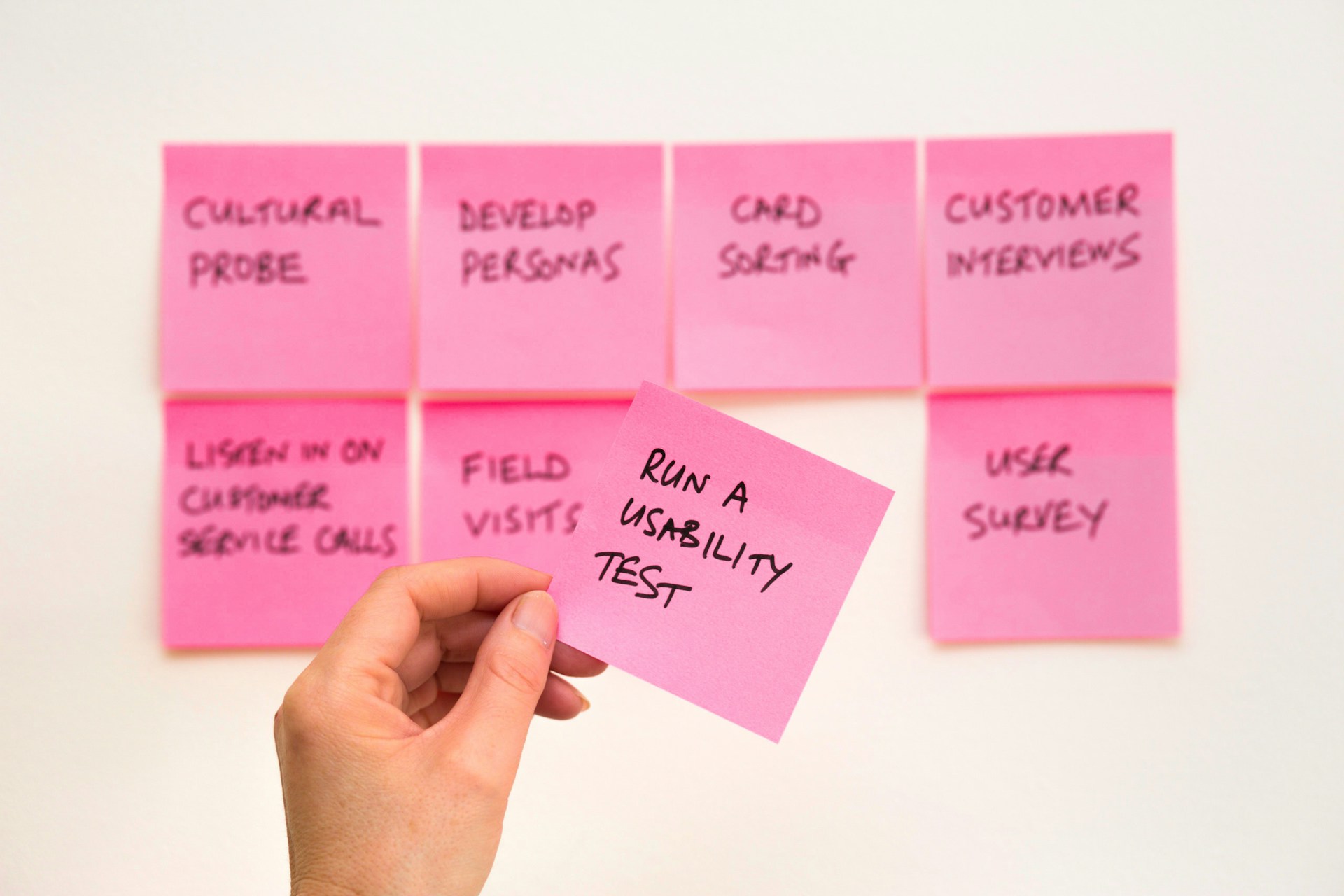
Usability testing evaluates how easily users can complete specific tasks within your product or service. This method reveals friction points, confusion areas, and opportunities for improvement in user interfaces and experiences. To conduct usability testing effectively, plan the test, recruit representative users, observe their interactions, analyze results, and prioritize issues to address.
- Moderated Usability Testing involves a researcher guiding participants through tasks while observing their behaviors and collecting feedback. This approach allows for real-time clarification and follow-up questions but requires more resources and coordination.
- Unmoderated Usability Testing allows participants to complete tasks independently while their interactions are recorded. This method provides more natural behaviors since users aren’t influenced by researcher presence, and it can be conducted at scale with remote participants.
- Guerrilla Testing involves conducting quick, informal usability tests in public spaces or with readily available participants. While less rigorous than formal testing, this approach can quickly validate design concepts and identify obvious usability issues.
Essential usability testing components include:
- Clear task scenarios that reflect real-world usage
- Standardized testing protocols for consistent results
- Multiple success metrics beyond task completion
- Post-test interviews to understand user thought processes
A/B Testing and Experimentation
A/B testing compares design variants to determine which performs better using statistical evidence from actual user behavior data. Success requires clear hypotheses that predict how changes will impact key metrics, proper test design with adequate sample sizes and duration, and thorough results interpretation that explains why certain changes worked. This understanding of the “why” behind performance differences enables better future design decisions and optimized user experiences.
Remote vs. In-Person Testing
Remote testing offers convenience, cost-effectiveness, and access to diverse participants using their own devices in natural environments, supported by evolved tools for screen sharing and real-time communication. In-person testing remains valuable for physical products and observing non-verbal cues, while hybrid approaches strategically combine both methods—such as remote interviews followed by in-person usability sessions—to maximize benefits and minimize each method’s limitations.
Data Collection and Analysis
Gathering Meaningful Data
Effective data collection requires systematic approaches that capture both behavioral observations and participant feedback. The quality of insights depends heavily on the quality of data collected during research sessions.
- Behavioral Data includes task completion rates, time on task, error rates, and navigation patterns. This objective data provides measurable insights into user performance and identifies specific areas of difficulty.
- Attitudinal Data captures user opinions, preferences, and emotional responses. This subjective data helps explain why users behave in certain ways and reveals their underlying motivations and concerns.
- Contextual Data includes information about the user’s environment, device, and circumstances during the research session. This context helps interpret findings and understand how external factors influence user behavior.
Documentation strategies should capture both planned observations and unexpected insights. Standardized templates help ensure consistency across sessions while allowing flexibility for unique findings.
Analyzing Research Findings
Analysis transforms raw data into actionable insights that inform design decisions. This process requires both analytical rigor and creative interpretation to identify patterns and implications.
- Quantitative Analysis involves statistical examination of numerical data to identify significant patterns, correlations, and trends. This analysis provides objective evidence for research findings and helps prioritize improvement opportunities.
- Qualitative Analysis requires coding and categorizing observational data and feedback to identify themes and insights. This process often reveals unexpected findings and provides deeper understanding of user motivations.
- Triangulation combines insights from multiple data sources and methods to validate findings and create more robust conclusions. When different research methods point to similar conclusions, confidence in the findings increases.
Pattern recognition involves identifying recurring themes across participants and sessions. These patterns often reveal fundamental user needs or systemic issues that require attention.
Turning Insights into Action
Research insights must be translated into specific, actionable recommendations that teams can implement. This translation process bridges the gap between understanding user needs and creating solutions that address those needs.
Prioritization Frameworks help teams decide which insights to act on first. Consider factors like impact on user experience, alignment with business goals, implementation complexity, and available resources.
Priority levels for research insights:
- High Priority: Critical usability issues affecting core tasks
- Medium Priority: Improvements that enhance user satisfaction
- Low Priority : Nice-to-have features or minor optimizations
Design Implications should clearly connect research findings to specific design changes or considerations. Instead of general recommendations, provide concrete suggestions about layout, functionality, content, or interaction design.
Success Metrics define how teams will measure whether implemented changes successfully address identified user needs. These metrics should be specific, measurable, and directly related to the research findings.
Implementation and Iteration

Creating Research-Driven Design Solutions
Translating research insights into design solutions requires collaborative effort between researchers, designers, and stakeholders, especially in organizations moving toward continuous product design practices. This process ensures that user needs remain central while balancing business constraints and technical feasibility.
- Design Principles derived from research findings provide consistent guidance for design decisions. These principles should reflect key user needs and behaviors identified through research while supporting business objectives.
- Feature Prioritization should reflect both user needs and business impact. Research insights help teams understand which features will provide the most value to users while supporting company goals.
- Prototype Development allows teams to test design concepts before full implementation. Research-informed prototypes can be quickly validated through additional user testing, reducing the risk of building features that don’t meet user needs.
Continuous Testing and Optimization
User research and testing should be ongoing processes rather than one-time activities. Continuous optimization ensures that products evolve with changing user needs and market conditions.
- Iterative Testing involves regularly evaluating design changes and new features through user research. This approach helps teams identify issues early and make incremental improvements based on user feedback.
- Performance Monitoring tracks key metrics over time to identify trends and potential issues. Regular monitoring helps teams understand the long-term impact of design changes and identify opportunities for further optimization.
- Feedback Loops establish systematic processes for collecting and acting on user feedback, including structured ways for stakeholders to provide effective feedback on web design. These loops ensure that user insights continue to inform product development and improvement efforts.
Measuring Success and ROI
Demonstrating the value of user research requires clear metrics that connect research activities to business outcomes. This measurement helps justify continued investment in user research and testing programs.
- User Experience Metrics include task completion rates, user satisfaction scores, and usability ratings. These metrics directly reflect the quality of user experiences and can be tracked over time to measure improvement.
- Business Metrics connect user experience improvements to business outcomes like conversion rates, customer retention, and revenue growth. These connections help stakeholders understand the business value of user research investments.
- Process Metrics measure the efficiency and effectiveness of research activities themselves. These might include time from research to implementation, stakeholder satisfaction with research insights, and the adoption rate of research recommendations.
Common Challenges and Solutions
Overcoming Resource Constraints
Many organizations struggle with limited budgets, tight timelines, and small research teams. These constraints require creative approaches to maximize research impact while working within realistic limitations.
Lean Research Methods focus on quick, cost-effective techniques that provide valuable insights without extensive resources. Guerrilla testing, online surveys, and analytics analysis can provide meaningful data with minimal investment.
Cost-effective research approaches include:
- Guerrilla testing in public spaces or online communities
- Remote unmoderated usability testing tools
- Analytics analysis using existing data
- Customer support ticket analysis for pain point identification
Cross-Functional Collaboration involves training non-researchers to conduct basic research activities. Designers, product managers, and developers can learn to conduct simple usability tests and user interviews, expanding research capacity.
Research Repositories help teams maximize the value of existing research by making insights easily accessible and searchable. Well-organized repositories prevent duplicate research and help teams build on previous findings.
Managing Stakeholder Expectations
Research findings don’t always align with stakeholder assumptions or preferences. Managing these situations requires clear communication and strong advocacy for user needs while acknowledging business realities.
Stakeholder Involvement in research planning and execution helps build buy-in for findings and recommendations. When stakeholders participate in user interviews or observe usability tests, they develop stronger empathy for user needs.
Clear Communication of research findings requires translating insights into business language and connecting user needs to company objectives. Visual presentations and concrete examples help stakeholders understand and remember key insights.
Compromise Strategies acknowledge that perfect user experiences may not always be feasible given business constraints. Research can help identify acceptable trade-offs that balance user needs with business requirements.
Ensuring Research Quality
Maintaining research quality while working efficiently requires attention to methodology, participant recruitment, and analysis rigor. Poor quality research can lead to misleading insights and misguided design decisions.
Methodological Rigor involves following established research practices and avoiding common biases. This includes proper sample sizes, unbiased questioning techniques, and appropriate analysis methods.
Participant Quality ensures that research participants accurately represent target users. Careful screening and recruitment processes help avoid insights based on unrepresentative samples.
Validation Strategies use multiple research methods to confirm findings and reduce the risk of acting on misleading data. When possible, validate qualitative insights with quantitative data and vice versa.
How Passionate Agency Can Transform Your User Research Strategy
At Passionate Agency, we understand that effective user research and testing require both strategic thinking and flawless execution. Our team combines deep UX research expertise with comprehensive design, development, and digital marketing services to help businesses create experiences that truly resonate with their users.
Our approach addresses the specific challenges faced by growth-focused companies. Whether you’re struggling to improve conversion rates, seeking to differentiate your brand, or implementing AI solutions, we provide the research foundation needed for informed decision-making.
We specialize in translating complex user insights into actionable design recommendations that drive measurable business results. Our team doesn’t just deliver research reports – we partner with you to implement findings through strategic design solutions that improve user experiences and business metrics.
Our Optimize Package: Complete User Research and Testing Solution
Our Optimize package is specifically designed for businesses ready to leverage comprehensive user research and conversion rate optimization strategies. At $10,000 per month ($9,000 annually), this package provides access to senior UX researchers and CRO analysts who can transform your understanding of user behavior.
| Service Category | Included Capabilities | Business Impact |
|---|---|---|
| Qualitative Research | User interviews, ethnographic studies, contextual inquiries | Deep understanding of user motivations |
| Quantitative Research | Analytics analysis, behavior tracking, statistical evaluation | Measurable insights and trend identification |
| Testing & Validation | A/B testing, hypothesis generation, experimental design | Evidence-based optimization decisions |
| Strategic Planning | Experimentation roadmaps, funnel optimization, ongoing audits | Systematic approach to continuous improvement |
The Optimize package includes everything from our Grow package plus specialized research capabilities:
Research & Analysis Capabilities:
- Qualitative UX research through in-depth user interviews and ethnographic studies
- Quantitative UX research including comprehensive analytics and user behavior tracking
- CRO & CXO hypothesis generation based on research findings
- A/B and validation testing with rigorous experimental design
- Advanced analytics & reporting connecting research to business metrics
Strategic Implementation:
- Funnel optimization through systematic user journey analysis
- Data-driven recommendations translating insights into action
- Experimentation strategy & roadmap development
- Ongoing audits & optimization for continuous improvement
Why Choose Passionate Agency for User Research
Our team understands that effective user research requires both methodological expertise and business understanding. We don’t just conduct research – we help you build sustainable research practices that support long-term growth and user satisfaction.
Our integrated approach combines user research with design implementation, ensuring that insights translate into improved user experiences. Unlike agencies that only provide research reports, we partner with you through the entire process from insight generation to solution implementation and performance measurement, and can even support partner agencies through premium white label web design services.
Summary
User research and testing are indispensable tools in the product development process. By understanding user needs, behaviors, and preferences, you can create products that genuinely resonate with users. From planning and conducting research to integrating findings into design, each step is crucial for developing user-centric products.
Incorporating user feedback at various stages of development ensures continuous refinement and enhancement. By applying the insights gained from user research and testing, you can create products that not only meet but exceed user expectations.
